How to stop diarrhea fast, and when to see a doctor
The short answer
Most diarrhea from a stomach bug or something you ate clears up on its own within a few days, and the most useful thing you can do is replace lost fluids with water or an oral rehydration solution. Eat plain food when you feel ready, and ask a pharmacist before taking anti-diarrhea medicine, which isn't suitable with fever, bloody stool or for young children. See a doctor if it lasts more than a week, or sooner if there's blood, a high fever, severe pain or signs of dehydration.
Diarrhea is miserable, and when it hits you mostly want to know two things: how to make it stop and whether you should be worried. The honest answer to the first is that short bouts usually stop by themselves within a few days, and what you do in the meantime is mostly about staying hydrated and comfortable. The answer to the second depends on how long it lasts and what comes with it.
Diarrhea means loose, watery stools, usually three or more times in a day. On the Bristol stool chart that’s type 6 (mushy) or type 7 (watery). Most short episodes come from a virus such as norovirus, food poisoning, or something that didn’t agree with you. Diarrhea that keeps coming back is a different question, and there’s more on that below.
Drink first, then worry about stopping it
Diarrhea drains water and salts from your body, and dehydration is what makes it dangerous, especially for babies, small children and older adults. Getting fluids in matters more than anything else on this page.
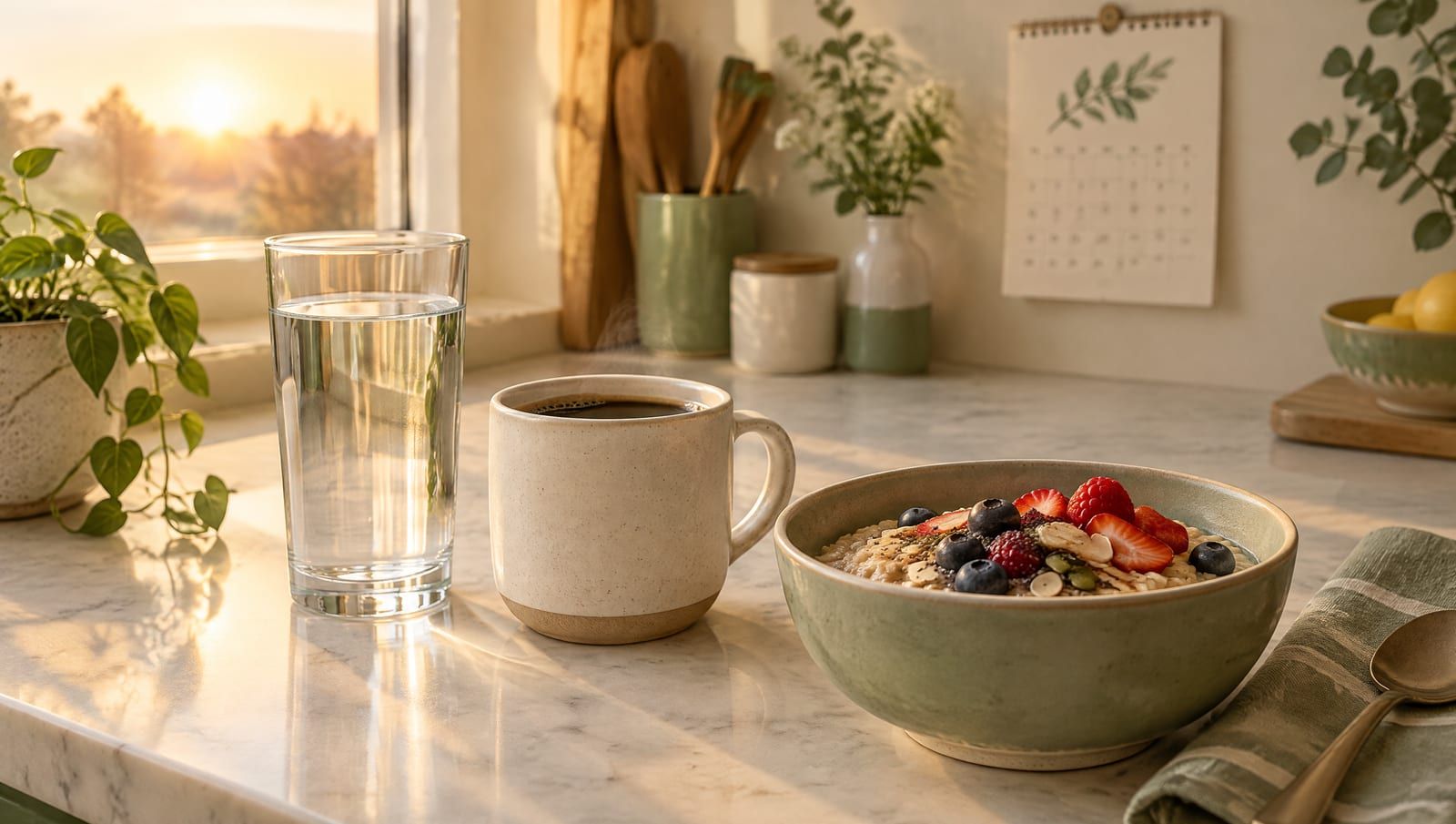
Small, frequent sips are easier to keep down than big glasses, particularly if you’re also being sick. Water is fine for most adults. If you’re losing a lot, an oral rehydration solution (ORS) is better. These come as sachets or ready-made drinks from a pharmacy, and they replace salt and sugar in the ratio your gut absorbs best. The WHO recommends ORS as the main way to prevent and treat dehydration from diarrhea, and it’s widely used for children.
Some practical points:
- Keep sipping even if you’re not thirsty. You need enough to keep passing pale yellow pee.
- Broth and clear soups help with salt as well as fluid.
- For children, the NHS advises avoiding fruit juice and fizzy drinks, which can make diarrhea worse.
- If you’re breastfeeding or bottle feeding a baby, keep feeding as normal and offer feeds more often. Ask your pediatrician or a pharmacist about rehydration solution for babies.
- Go easy on alcohol and strong coffee until you’re better.
Homemade salt and sugar mixtures are easy to get wrong, so a pharmacy product is the safer choice if you can get one.
What to eat with diarrhea
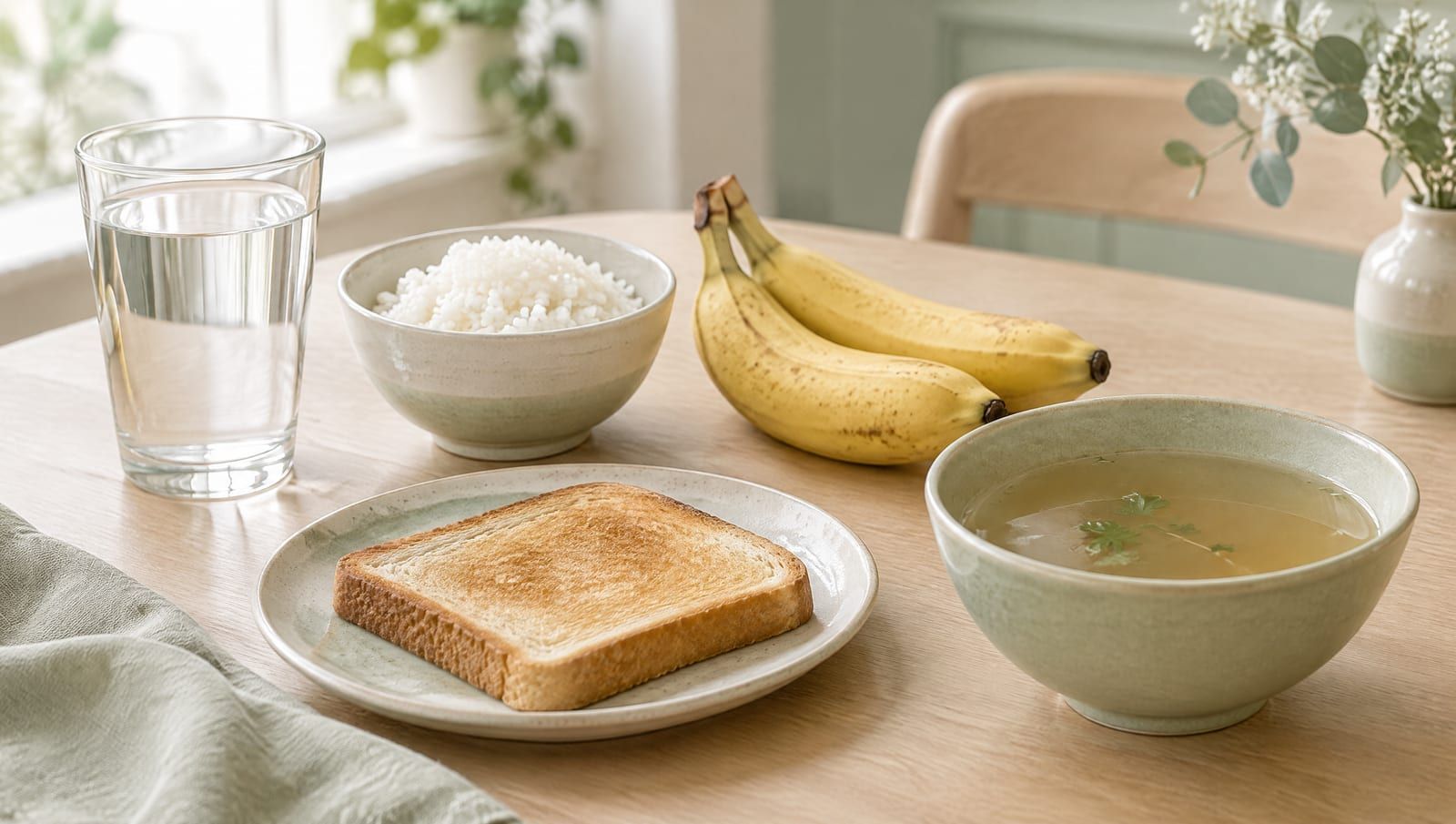
You don’t need to stop eating. The old advice to starve a stomach bug has been dropped, and the NHS says to eat when you feel able to. Small meals of plain food tend to sit best for the first day or two.
| Usually easy on the gut | Better to go easy on for a few days |
|---|---|
| White rice, plain pasta, potatoes | Fried, greasy or very fatty food |
| Toast, crackers, plain bread | Very spicy dishes |
| Bananas, applesauce | Sugary drinks, sweets and fruit juice |
| Broth, clear soups | Alcohol |
| Eggs, plain chicken or fish | Lots of coffee or energy drinks |
| Yogurt, if dairy usually suits you | Sugar-free gum and sweets with sorbitol or xylitol |
The well-known BRAT diet (bananas, rice, applesauce, toast) is a reasonable way to start, but you don’t have to stick to it. It’s low in protein and fat, so add other foods back as your appetite returns. Some people find milk harder to digest for a little while after a stomach bug, because the gut takes time to recover its ability to break down lactose. If dairy seems to make things worse, cut back for a week or so.
Over-the-counter medicine
Two medicines are widely sold for diarrhea: loperamide, which slows the gut down, and bismuth subsalicylate. They can take the edge off symptoms in adults, which helps if you have to travel or get through a work day. They don’t treat the cause, and slowing things down isn’t always a good idea.
Ask a pharmacist before taking either, and don’t use them:
- if you have a fever
- if there’s blood or mucus in your stool, or it’s black
- for young children, unless a doctor tells you to
- for diarrhea after a course of antibiotics, without checking with a doctor first
The reason is that some bacterial infections need to be cleared out, and holding them in can make them worse. Bismuth can also turn stool and the tongue black, which is harmless but alarming if you don’t expect it. Antibiotics usually aren’t needed for diarrhea and are only used when a doctor finds a specific cause.
How long does diarrhea last?
For a typical stomach bug, the worst is often over in a day or two. The NHS says diarrhea usually stops within 5 to 7 days and vomiting within 1 or 2 days. Stools can stay a bit soft or irregular for several days after you otherwise feel fine, as the gut settles back down.
Doctors group diarrhea by how long it lasts. Acute diarrhea is short, usually lasting a day or two. Persistent diarrhea lasts two to four weeks. Chronic diarrhea lasts four weeks or more, and it’s worth seeing a doctor about, because the cause is more often something ongoing, like IBS, a food intolerance, celiac disease, inflammatory bowel disease or a medicine side effect. If loose stools keep coming back, the IBS symptoms guide and the guide to type 6 stool cover the common causes.
Stop it spreading
Infectious diarrhea passes easily to other people in the house. Wash your hands with soap and water after using the toilet and before eating or preparing food. Alcohol hand gels don’t kill norovirus well, so soap and water is the better choice. Clean toilet seats, flush handles and taps with a bleach-based cleaner, wash soiled bedding and towels on a hot cycle, and don’t share towels.
The NHS advises staying off work or school until 2 days after your last episode of diarrhea or vomiting, and avoiding preparing food for other people in that time.
When to see a doctor
Most diarrhea doesn’t need a doctor. Get medical advice if:
- it lasts more than 7 days, or vomiting lasts more than 2 days
- you have signs of dehydration, such as peeing very little, dark pee, dizziness, a dry mouth or feeling very weak
- there’s blood in your stool or it’s black and tar-like (see blood in stool)
- you have a high fever, or belly pain that is severe or getting worse
- it started after travel abroad, or after a hospital stay or antibiotics
- you’re pregnant, over 65, or have diabetes, kidney disease or a weakened immune system
- your bowel habits have changed for weeks without a clear reason, or you’re losing weight
For babies and children, get advice sooner. Call your doctor if a baby under 12 months has diarrhea, if a child stops feeding or drinking, or if a child under 5 shows signs of dehydration such as fewer wet diapers, no tears, a sunken soft spot on the head, or unusual sleepiness.
Get urgent help if someone is confused or very drowsy, can’t keep any fluids down, hasn’t peed all day, has bloody diarrhea with a fever, or has severe stomach pain.
A note on stool color
Diarrhea is often green or yellow, because bile rushes through before it has time to turn brown. That’s expected. The green poop guide explains why. Red, black or pale clay-colored stool is different and is worth mentioning to a doctor.
Tracking a bout of diarrhea
If you end up seeing a doctor, they’ll ask how long it’s been going on, how often you go, what the stool looks like and whether there’s blood. After a few rough days that’s hard to remember accurately.
Poopwell lets you log each bowel movement with one tap on its Bristol type, so you can see when type 7 turns back into type 5 and then 4. You can add color, urgency, pain and blood, and the app shows a warning if you record blood or a red, black or pale color. If diarrhea keeps coming back, logging the food groups you ate, like Dairy, Spicy, Fried or Caffeine, can help show a pattern, and the PDF report gives your doctor a clear summary. The app doesn’t diagnose anything, and it’s no replacement for medical advice when the warning signs above show up.
Questions people also ask
How can I stop diarrhea fast?
There's no instant fix, but you can feel better sooner. Sip fluids often, use an oral rehydration solution if you're losing a lot, eat small plain meals when you're hungry, and rest. A pharmacist can tell you whether an anti-diarrhea medicine such as loperamide is suitable for you. It isn't recommended if you have a fever or blood in your stool.
How long does diarrhea last?
Diarrhea from a stomach bug usually settles within a few days, and the NHS says it normally stops within 5 to 7 days in adults and children. If it lasts longer than 7 days, see a doctor. Diarrhea that lasts 4 weeks or more is called chronic and needs a proper check.
What should I eat when I have diarrhea?
Eat when you feel able to, starting with plain, easy foods such as rice, toast, bananas, crackers, potatoes, soup or broth. You don't need a strict diet. Fatty, fried and very sugary foods, alcohol and lots of caffeine can make things worse for a few days.
When should I see a doctor for diarrhea?
See a doctor if diarrhea lasts more than 7 days, if you see blood or black stool, have a high fever, severe belly pain, or signs of dehydration such as very little dark pee, dizziness or confusion. Babies, young children, older adults and people with weak immune systems should get advice sooner.
Is it better to let diarrhea run its course?
For most short bouts caused by a stomach bug, yes. Your body is clearing the infection, and fluids matter more than stopping the stools. Anti-diarrhea medicine can help adults get through a day of work or travel, but check with a pharmacist first and don't use it if there's fever or blood.
Sources
This guide is general information, not medical advice. If you're worried about a change in your bowel habits, talk to a doctor. Get urgent help for heavy bleeding, black tarry stool with dizziness, or severe belly pain.