Green poop: why it happens and when to worry
The short answer
Green poop is usually caused by food, such as leafy greens or green food coloring, by iron supplements, or by stool moving through the gut too fast for bile to turn brown. On its own it is rarely a sign of anything serious. It's worth seeing a doctor if green stool comes with diarrhea lasting more than a few days, fever, severe pain, blood, or weight loss.
Green poop looks alarming the first time you see it, but it’s one of the most common color changes and is usually harmless. Most of the time it comes down to something you ate or drank in the last day or two, a supplement, or stool that moved through your gut faster than usual.
The reason is bile. Your liver makes bile to help digest fat, and it starts out yellow-green. As it travels through the intestines, gut bacteria slowly break down its pigments and the color shifts to brown. If anything speeds that trip up, or adds green pigment of its own, you can end up with green stool. For the full range of colors, see the poop color chart.
Common causes of green poop
| Cause | What’s going on | What to do |
|---|---|---|
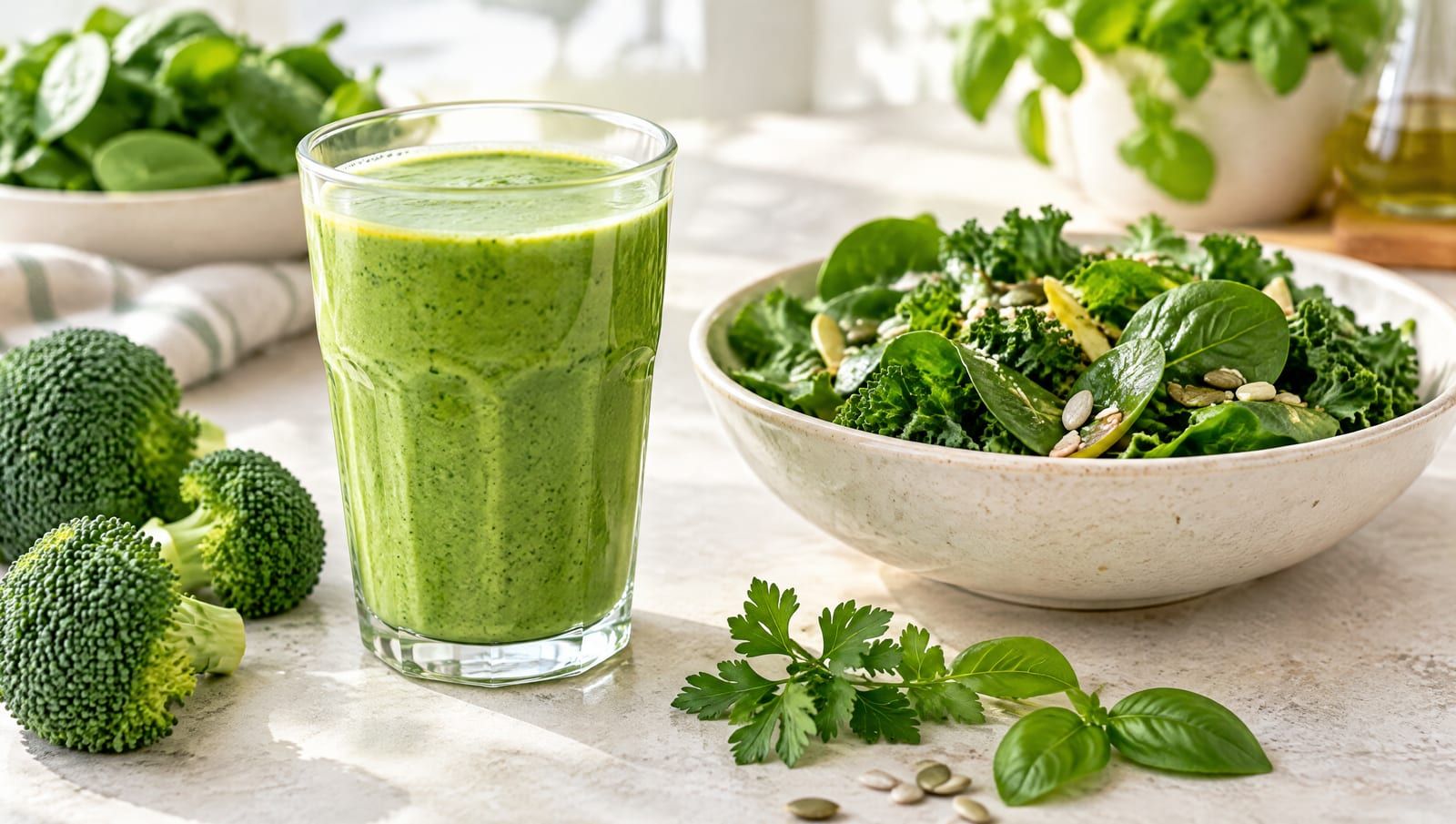
| Leafy greens and green foods | Chlorophyll in spinach, kale, broccoli, herbs and green smoothies passes through | Nothing. It clears in a day or two |
| Food coloring | Green, blue or purple dyes in drinks, frosting, candy or sports drinks | Nothing |
| Iron supplements | Unabsorbed iron can turn stool dark green or nearly black | Usually fine. Mention it if you’re worried |
| Diarrhea or fast transit | Bile doesn’t have time to turn brown | Drink fluids. See a doctor if it lasts |
| Antibiotics | Fewer of the gut bacteria that turn bile brown | Usually settles after the course ends |
| Infection | Bugs like norovirus, salmonella or giardia cause fast, loose stool | Fluids, rest, and medical advice if it persists |
| Bowel prep | Laxatives before a colonoscopy push bile through fast | Expected |
Food and drink
This is the most likely answer if you feel fine. A big spinach salad, a green smoothie, pesto, matcha or a lot of broccoli can all show up the next day. Artificial colors are another frequent cause, and they don’t have to be green: blue and purple dyes can come out green too, which is why a blue sports drink or a birthday cake with bright frosting sometimes leads to a surprise.
Iron supplements
Iron tablets often make stool dark green or black. That’s a normal side effect and not a sign of bleeding. If you’ve just started iron and your stool is dark green and formed, that’s very likely the reason.
Diarrhea and fast transit
When stool rushes through the intestines, bile has less time to break down, so it keeps more of its original green-yellow color. This is why green poop often goes along with loose stool, a stomach bug, or anything that speeds digestion up, including stress, a lot of coffee and some medicines. On the Bristol stool chart, green stools that are also types 6 or 7 point to this.
Antibiotics and infections
Antibiotics thin out the bacteria that turn bile brown, so green stool during or just after a course is common. Gut infections can cause green diarrhea too. Giardia, a parasite you can pick up from contaminated water, causes smelly diarrhea, cramps and bloating, and the NHS advises getting medical help if diarrhea lasts more than 7 days.
Dark green poop
Dark green stool in adults is usually iron or a lot of dark leafy vegetables. It can look almost black under bathroom lighting. The way to tell the difference is texture and context. Dark green from food or iron is usually formed and looks like normal stool apart from the color.
Black stool that is sticky, shiny and tar-like, with a strong smell, is a different thing. Doctors call it melena, and it can mean bleeding in the stomach or upper small intestine. If your stool looks like that and you haven’t taken iron or bismuth medicines like Pepto-Bismol, read the black stool guide and get medical advice promptly.
Green poop with mucus
A small amount of mucus in stool is normal. More mucus with green, loose stool can come with an infection or irritation of the gut, and some people with IBS notice it during flares. If it happens once with a stomach bug, it usually settles. If it keeps happening, or there’s blood with it, see a doctor. The mucus in stool guide has more detail.
Green poop in babies
Green stool is common in babies and usually means nothing. Breastfed babies often pass green or mustard yellow stool, and formula can produce greener shades. Pale, white or chalky stool in a baby is the one to act on, and it needs a doctor the same day. For anything else about your baby’s poop, your pediatrician is the right person to ask.
When to see a doctor
Green stool by itself is rarely a reason to worry. See a doctor if it comes with any of these:
- Diarrhea that lasts more than a few days, or more than 2 days in a child
- Signs of dehydration, such as peeing much less, dark urine, dizziness or a very dry mouth
- A fever, or severe or worsening belly pain
- Blood in the stool, or black, tar-like stool (see blood in stool)
- Weight loss you can’t explain
- A change in your usual bowel habits that lasts for weeks
- Green diarrhea after recent travel, drinking untreated water or swimming in lakes or rivers
Get urgent help if you’re vomiting blood, have severe pain, or feel faint.
What you can do at home
If you feel well, think back over the last 48 hours. Leafy greens, a colorful drink, a new supplement or a course of antibiotics explains most green stools. Give it a day or two and the color should go back to brown on its own.
If you have diarrhea, keep drinking fluids. Water is fine, and oral rehydration solutions from a pharmacy help if you’re losing a lot. Most stomach bugs settle within a few days.
Tracking green poop
One green stool doesn’t tell you much. A pattern does. If you notice green stool often, it helps to see whether it lines up with particular foods, stressful weeks, medicines or loose stools.
In Poopwell, you can log each bowel movement with one tap on its Bristol type and add green as the stool color. You can also tap the food groups you ate that day, such as Vegetables, Caffeine or Spicy, and the calendar shows how your stools change over time. Green and yellow don’t trigger warnings in the app, since they’re usually food related. If you’re also dealing with frequent loose stools or bloating, an IBS food diary can help you and your doctor spot what’s behind it.
Questions people also ask
Why is my poop green?
The most common reasons are eating a lot of leafy greens, food or drinks with green, blue or purple dye, taking iron supplements, or having diarrhea. When stool moves quickly, bile stays green instead of breaking down to brown.
Is green poop bad?
Usually not. One or two green stools after a salad, a smoothie or a brightly colored drink is normal. Green diarrhea that lasts more than a few days, or green stool with fever, blood or strong pain, should be checked by a doctor.
What does dark green poop mean?
Dark green stool in adults usually comes from iron supplements or a lot of dark leafy vegetables like spinach or kale. If it looks closer to black and is sticky or tar-like, treat it as black stool and get medical advice.
Can antibiotics cause green poop?
Yes. Antibiotics change the bacteria in your gut, and those bacteria help turn bile from green to brown. Stool can look green while you take them and for a short while after.
Is green poop normal for babies?
Green stool is common in babies, both breastfed and formula fed, and is usually fine. Pale, white or chalky stool is different and needs a doctor the same day. If you're unsure about your baby's poop, ask your pediatrician.
Sources
This guide is general information, not medical advice. If you're worried about a change in your bowel habits, talk to a doctor. Get urgent help for heavy bleeding, black tarry stool with dizziness, or severe belly pain.